
Adding beauty
is in our nature.
Adding beauty
is in our nature.
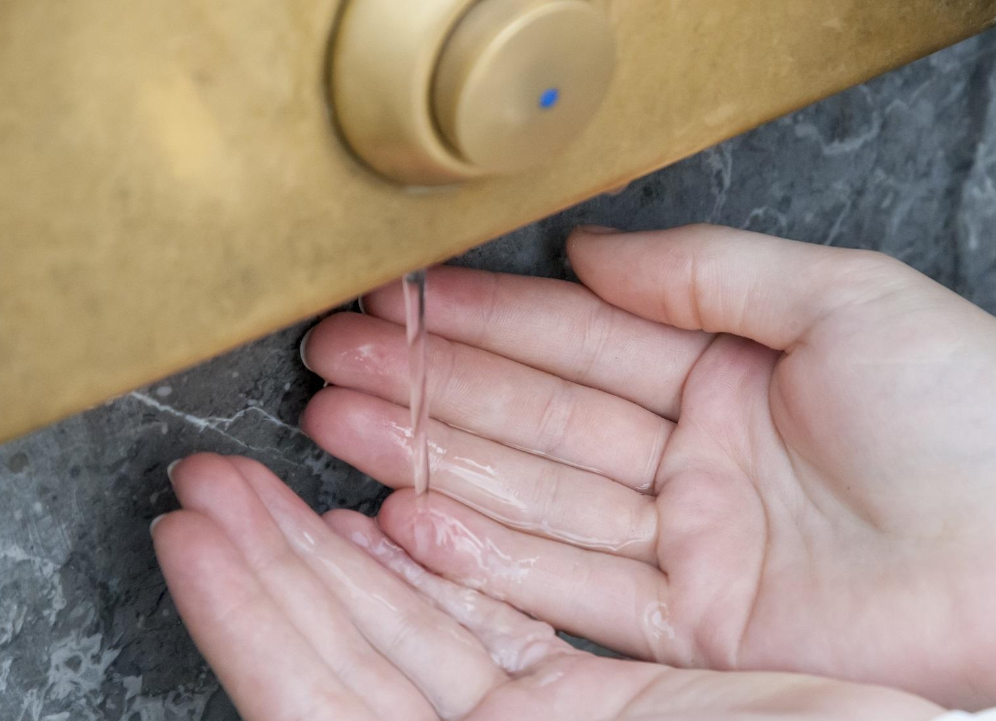 Lourdes, a historic town in Bigorre, has been a major Catholic pilgrimage site since the apparitions of the Virgin in 1858, welcoming 3 million pilgrims from all over the world each year, who come to pray at the grotto of Massabielle and make the gesture of water.
Un lieu unique et extraordinaire à bien des égards, qui vaut bien d’y passer une journée lors de votre séjour au Chalet La Source !
Apparitions of the Virgin Mary at the Sanctuary of Our Lady of Lourdes
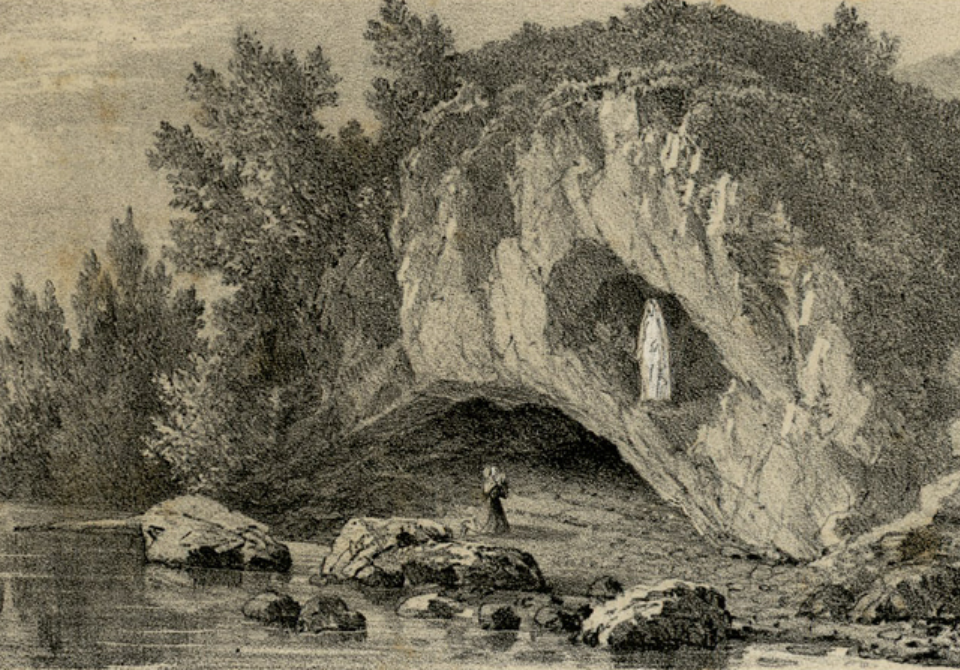 In 1858, young Bernadette Soubirous was 14 years old; very poor and in fragile health, she could neither read nor write. She lived in misery with her family in a former dungeon.
On February 11, 1858, Bernadette went to the rock of Massabielle, on the banks of the Gave, to collect dead wood. This place was called the "pig's tutte" because it was so dirty and dark.
It was there that Bernadette heard "like a gust of wind". She then saw in a niche in the rock, a female figure which she described as: "A lady dressed in white; she had a white dress, a white veil, a blue belt and a yellow rose on each foot".
This is the first of the apparitions of the Virgin Mary to the young Bernadette; 17 others will follow, until July 16, 1858.
 In 1862, miraculous healings were recognized by the Catholic Church, and the apparitions of "The White Lady" to Bernadette were officially recognized.
Bernadette Soubirous, who died in 1879, was canonized by Pope Pius XI in 1933. Today it is possible to visit the places where Bernadette lived, by following "The Way of Bernadette".
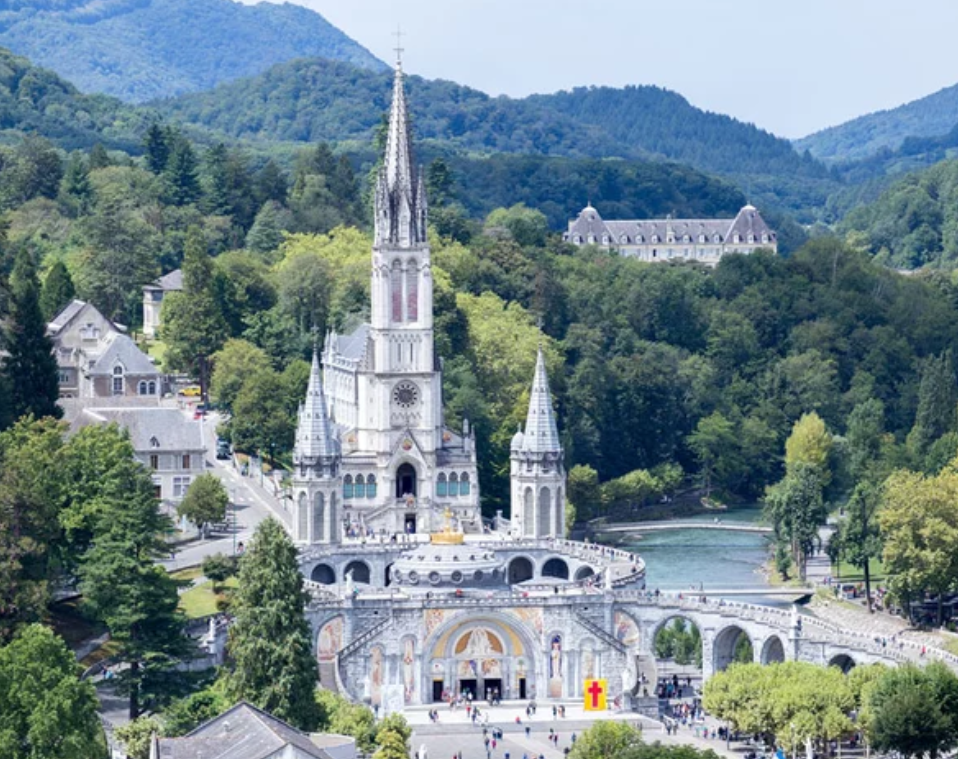
On the site of the apparitions, the Church began the construction of a sanctuary in 1871. The Sanctuary of Our Lady of Lourdes, which covers 52 hectares, contains many treasures: the Grotto of Massabielle, the Basilica, the Crypt, the Basilica of Our Lady of the Rosary, the Basilica of Saint Pius X, the Stations of the Cross…
Whether believer or not, everyone will find in Lourdes an atmosphere conducive to contemplation and reflection, prayer or meditation. The heart of this Marian city emanates a unique energy that must be experienced at least once!
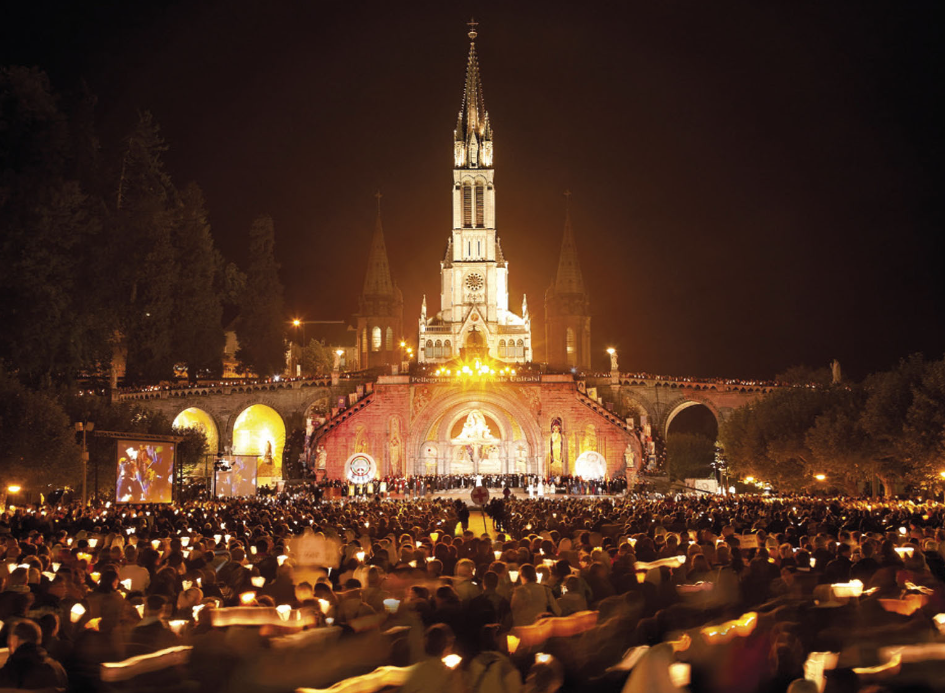 During the Nights of Lourdes, the Sanctuary is a place of highlights where thousands of pilgrims gather for torchlit processions, followed by a mass in the Basilica of Pius X.
During Marian processions, each person holds a candle, and the esplanade is covered in these fragile lights. Each person expresses their prayer intentions, in as many languages as there are nationalities represented.
The heart of the Sanctuary remains the grotto of Massabielle. Adorned with a statue of the Virgin, pilgrims come to pray and touch the rock face as an act of faith, a stone that has become smooth, soft and shiny since the visit of millions of pilgrims.
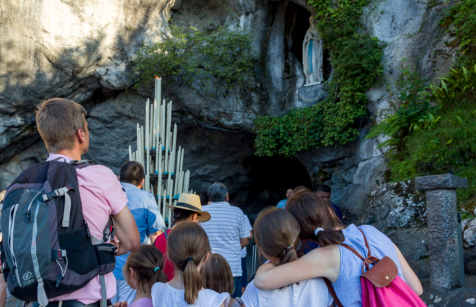 The water of Lourdes, and the gesture of water
During the ninth apparition, the Lady told Bernadette: "Go and drink and wash at the fountain." Bernadette then uncovered a previously unknown spring, from which the precious water of Lourdes comes.
It was through contact with this water that the first healing miracles were accomplished.
Since then, water from Lourdes has supplied the fountains of the Sanctuary. This water has become a pilgrimage in itself, a hope for millions of sick people around the world, and pilgrims from all over the world come to drink it and bathe in it.
 Everyone drinks water and splashes water on their face. This is called the water ritual. It is also possible to fully immerse oneself in pools managed by volunteer Hospitaliers.
Scientific analyses, however, have found no particular properties in it. As Saint Bernadette said: "A single drop is enough! It is faith that is needed!"
Ancient history of Lourdes: the fortified castle of Lourdes
In contrast to the contemporary buildings of the Sanctuary and the spirit of universal brotherhood that reigns there, one is almost surprised to find in Lourdes, overlooking the town from a rocky spur, a castle with enormous ramparts, a vestige of medieval wars.
In fact, the site has been inhabited for millennia, as evidenced by prehistoric remains including the famous "Lourdes horse" made of mammoth ivory. From Roman times onwards, fortifications were erected on this strategic position between the plain and the valleys.
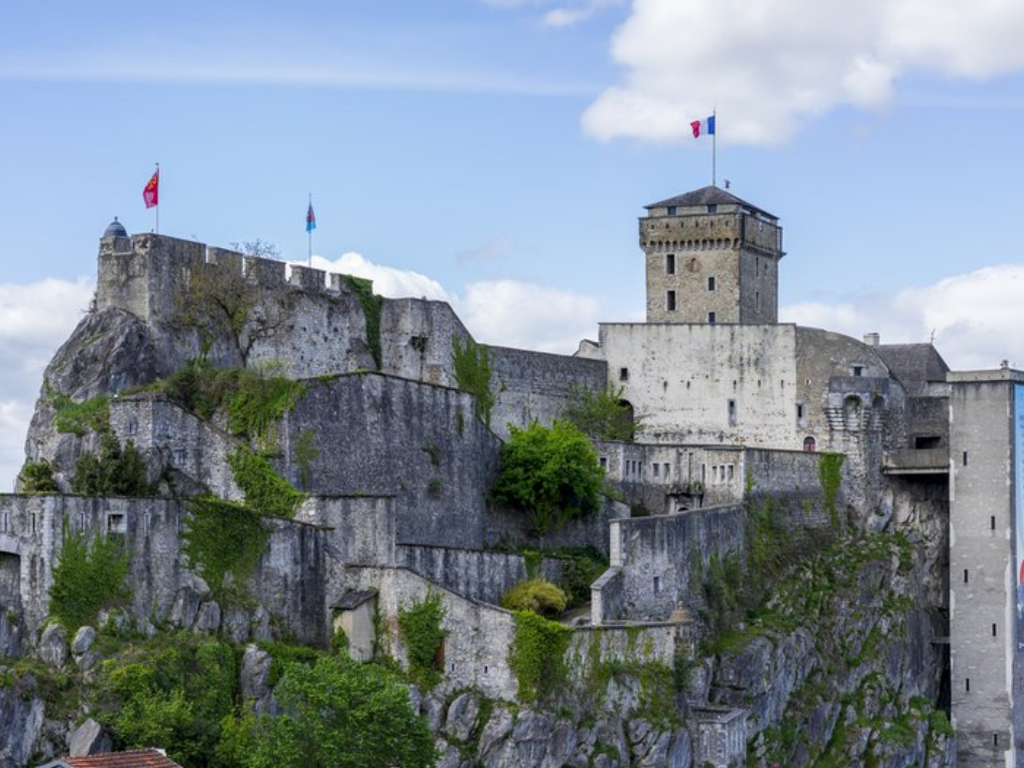 Au 8ème siècle sous le règne de Charlemagne, Roi des Francs, ce château alors nommé château de Mirambel, est occupé par les sarrasins. Charlemagne vient en faire le siège, en vain pendant des mois. Charlemagne propose alors au sultan, Mirat, de lui laisser le château en échange de sa conversion à la foi catholique. Mirat accepte et reçoit le baptême. Il choisit le nom de Lorus. Le château de Mirambel, et par extension le village, prennent le nom de « Lorda », dérivé du nom arabe, « (el) ouarda » (la rose) qui deviendra ensuite « Lourdes ».
The castle in its current form dates from the 11th century, when it was occupied by the Counts of Bigorre. Throughout the Middle Ages, during the Hundred Years' War, and up to the 16th century, this highly coveted castle was the subject of several sieges. Given to the English by the Treaty of Brétigny in 1360, it was recaptured by the French in 1407.
In the 17th century, the castle became a royal fortress and housed only prisoners. It was finally bought by the city of Lourdes in 1894, which established the Pyrenean Museum there.

