
Adding beauty
is in our nature.
Adding beauty
is in our nature.
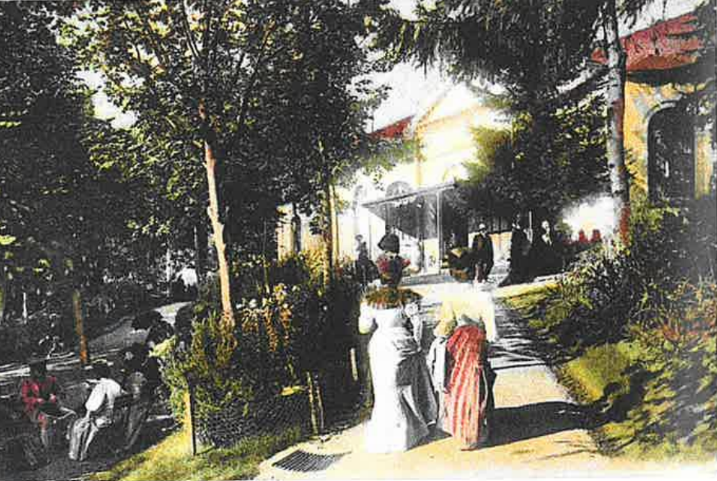 Le village de Cauterets est le témoin bien vivant de la Belle Epoque, en cette fin du XIXème siècle où le tout-Paris venait « prendre les eaux » dans les Pyrénées, admirer la beauté romantique des montagnes, mais aussi être vu sous ses plus beaux atours !
The thermal virtues of the waters of Cauterets were already renowned in Paris during the First Empire: in the early 1800s, Louis Bonaparte, King of Holland and Queen Hortense came to bathe there.
This renown among a wealthy clientele continued to grow throughout the 19th century; it persisted into the early 20th century while many other seaside resorts declined. For over a century, countless personalities—crowned heads, artists, writers, politicians—stayed there: George Sand, Alfred de Vigny, Chateaubriand, the Duke of Aumale, Victor Hugo, Thiers, Taine, Napoleon III and Eugénie, Gabriel Fauré, Alphonse XIII, Edward VII, Sarah Bernhardt, Maurice Chevalier, Edgar Degas, Léon Blum, Louis Berliot…
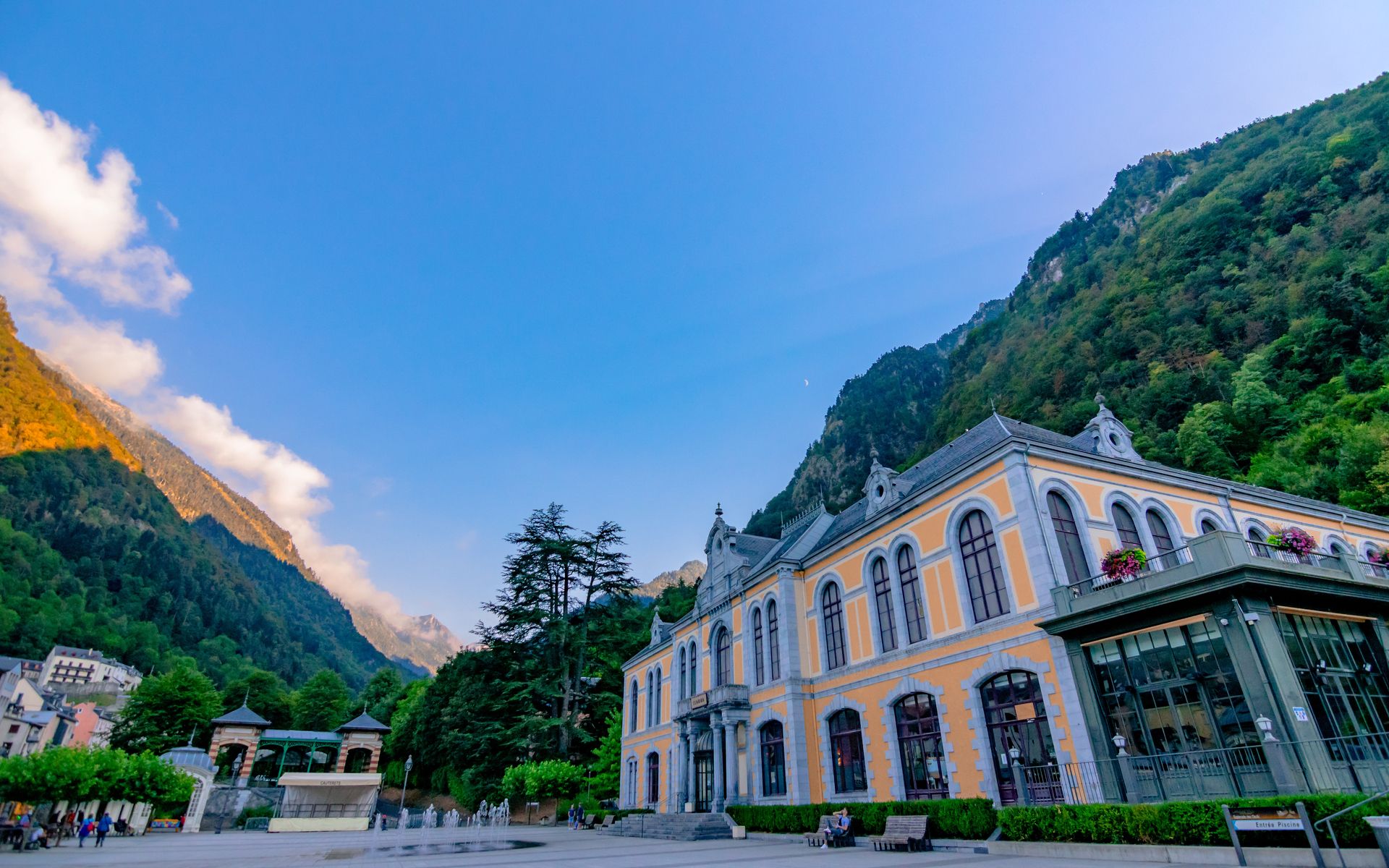
This large square was the focal point of fashionable Cauterets at the time – the place to see and be seen! Built in 1864, it owes its strange name to the sulfurous smell given off by the thermal waters.
It is from this magnificent esplanade, extended by a charming public garden, that one can best admire the architectural elegance of Cauterets, the contrast between the 19th-century style urbanism and the natural setting of the surrounding peaks.
The surrounding buildings bear witness to the leisure activities that occupied the wealthy clientele of yesteryear: the old Casino (now a cinema) where shows were performed, the bandstand where concerts took place, a magnificent promenade under Eiffel-style arcades whose dome comes from the 1900 Universal Exhibition, and finally a hotel, the very first one built in Cauterets: the Hôtel de Promenade which later became the Hôtel Regina.
 Monumental hotels and mansions
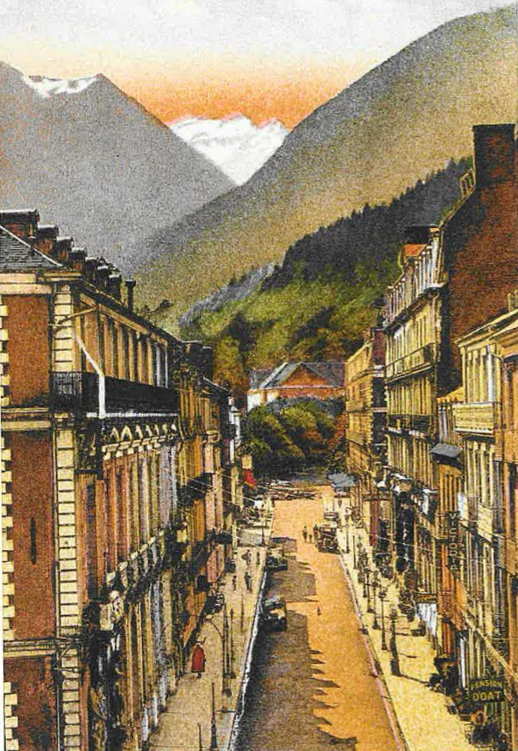
Théâtre des célèbres fêtes des fleurs des stations pyrénéennes à la fin du XIXème siècle, le boulevard Latapie Flurin - représenté sur cette carte postale ancienne - accueille les bâtiments les plus luxueux et les plus monumentaux de Cauterets. Leur confort était à la pointe du progrès pour l’époque : ascenseurs hydrauliques, eau courante à tous les étages, chauffage central, salons cossus, fumoirs...
En partant de l’Esplanade des Œufs, c’est tout d’abord l’hôtel d’Angleterre. Inauguré en 1878, c’était l’un des plus grands des Pyrénées avec 300 chambres, une salle immense sous des lustres fastueux et une grande coupole. C’est aujourd’hui une résidence pour particuliers. Son restaurant style Louis XV construit un peu plus tard en 1900, est devenu le siège du Musée 1900 où sont présentés les tenues, ustensiles et arts de la table de l’époque.
Plus loin, le Grand Hôtel Continental – lui aussi immense avec plus de 200 chambres - est une merveille d’architecture. Inauguré en 1882, il est conçu comme un palais italien avec cour intérieure, façade à cariatides et têtes sculptées - elles représenteraient les femmes célèbres de l’époque. Il a été depuis transformé en appartements.
Plus loin, en remontant l’Avenue du Mamelon Vert après le chalet bleu, on peut admirer deux belles maisons, dites maisons Flurin car elles furent construites par cette famille à la fin du XIXème siècle : le Chalet des Frênes, avec ses briques et ses boiseries rouges, et Castelgayard, en pierre d’Angoulême, inspirée du Château de Pau. Sur plusieurs générations, la famille Flurin famille contribua au développement économique de la ville en développant notamment la médecine thermale. C'est encore le cas aujourd'hui grâce à l'apiculture, portée par la maison Ballot-Flurin fondée en 1976 par Catherine Flurin, et dont la boutique se trouve un peu plus haut sur l'Avenue du Mamelon Vert.
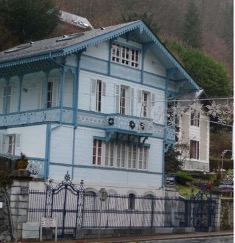 Just near the Esplanade, in the bend that goes up to the Pont d'Espagne, your attention is drawn to a strange blue chalet, of Slavic inspiration, with a crazy charm although strange in a Pyrenean village!
C’est en 1840 que la princesse russe Galitzine achète un terrain sur la rive gauche du gave, vierge de tout édifice. La princesse y fait construire un ensemble de bâtiments, incluant une isba, prolongée par une autre maison agrémentée d’une chapelle orthodoxe et une tour de quatre étages à toit en poivrière.
The entire complex was connected to the Blue Chalet by walkways, which have since been removed. Legend has it that the princess would receive her lovers on each floor of the tower, who would then reach the villa via these walkways, ensuring they never crossed paths!
The construction of the Hôtel d'Angleterre a few years later, by blocking the view over the valley, finally led the princess to sell her property. She never returned.
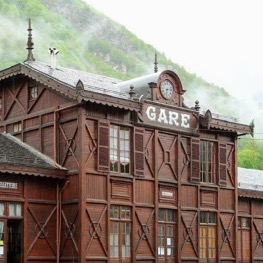 This building, one of the oldest in the city, is very striking due to its atypical mountain appearance reminiscent of a western set.
Il s’agit d’une reproduction du pavillon de la Norvège de l’exposition Universelle de 1889, transféré et construit à l’identique début 1900 – en kit et un seulement deux mois ! - une véritable prouesse vu la taille du bâtiment.
The reason was that it was necessary to transport the increasing number of spa-goers to the thermal baths, which were then located near the Pont d'Espagne. This station welcomed the first electric train in France, a rack railway which slowly carried them to their treatments….
This station has retained its beautiful green metal framework and stone porch, and a canopy where there is a clock that has been working ever since it was created.
Closed in 1949, it now houses the offices of the bus station and a theatre. The building has been listed as a Historical Monument since 1981.
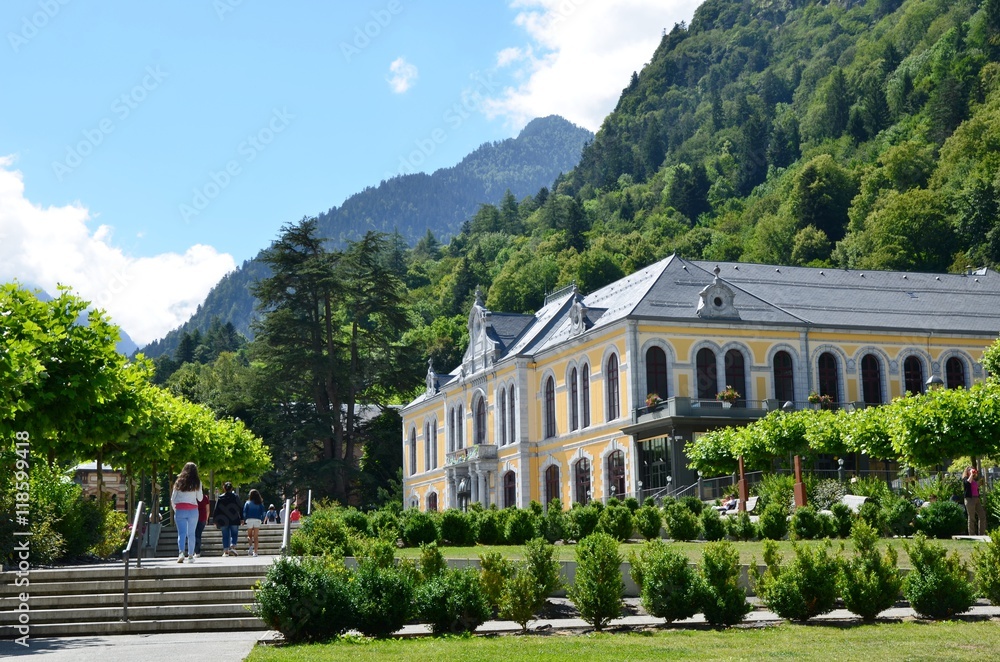
Nous terminons cette visite par ces Thermes historiques, construits en plusieurs étapes au XIXe siècle. L’architecture en reprend les codes de marbre et colonnes de l’architecture romaine. À l’emplacement des Bains du Rocher, se trouvait autrefois le bâtiment des thermes dédié aux enfants, dont la façade de l’époque a été conservée.
This is an opportunity to look back at the history of thermalism in Cauterets, which began well before this golden age.
Dès le XIIe siècle, Cauterets est réputée pour ses eaux chaudes, dont les bains sont aménagés par les moines. Ses eaux sont renommées pour soigner les sciatiques, les ulcères, la goutte et même la surdité.
C’est au XVIe siècle que cette réputation grandit, et ce - déjà - grâce à l’influence d’une personnalité : Marguerite de Navarre, qui y séjournera fréquemment de 1541 à 1549.
En 1605, le Roi fait créer une surintendance générale des bains et fontaines du royaume. Plusieurs médecins intendants des eaux vont alors se succéder et étudier les propriétés thermales des eaux de Cauterets.
C’est en 1714 que Jean-François Borie écrit le premier ouvrage « La recherche des eaux minérales de Cauterets avec la manière d’en user ».
Si les qualités des eaux de Cauterets sont reconnues, son approvisionnement laisse à désirer. Les travaux d’acheminement par des canaux commencent en 1800, mais il faudra attendre le milieu du XIXème siècle, grâce à la maitrise des techniques de captage des sources, pour que leurs eaux parviennent enfin aux thermes sans perdre leurs qualités thérapeutiques.
Le Chalet La Source vous attend pour organiser votre séjour, et profiter pleinement de ce magnifique village. N'hésitez pas à prendre contact !

