August 8th and 9th, 2026: The Medieval Festival of Esterre, at Château Sainte Marie
The Château Sainte Marie certainly deserved a festival of chivalry.
Car depuis le XIème siècle, il en a vécu des événements, il en a connu des légendes, du haut de son éperon rocheux ! Chaque année mi-août, les Médiévales d’Esterre sont une occasion de lui rendre hommage. Deux jours durant, démonstrations d’archerie, joutes et voltiges équestres se succèdent, ainsi que spectacles et banquets, dans la pure tradition médiévale.
So, on August 12th and 13th, come and conquer the Festival!
Sainte-Marie Castle, a story that begins in the age of knights
This castle of pebbles and stones was built around the 11th century by the Count of Montblanc, Lord of Bigorre, who thus strengthened his authority over the people of Barèges.
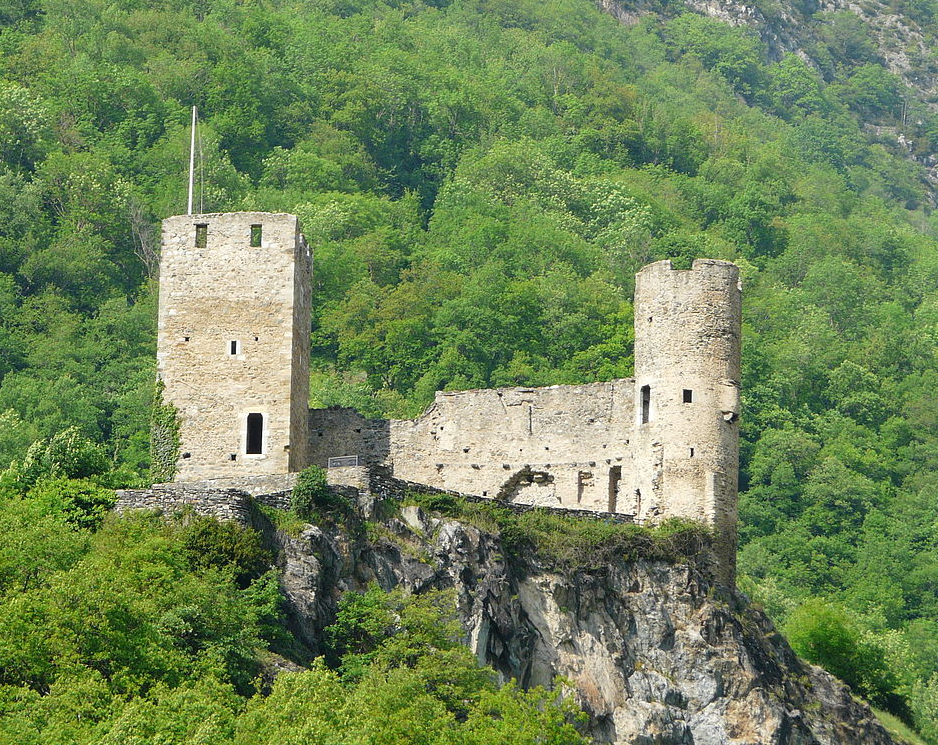 En ces temps de brigandage, c’est un lieu stratégique : une vigie sur la vallée de Barège, et un refuge pour la population.
Pourquoi Sainte Marie ? La légende dit qu’une jeune luzéenne prénommée Marie, enlevée et enfermée au château par un bandit, fut exaucée par la Vierge qu’elle priait pour la libérer, emportée au ciel par une nuée d’anges …
Legend also says that the man who loved Mary, named Peter, then withdrew as a hermit to the hill where the Solferino chapel now stands, and which for a long time bore the name of the Saint-Pierre hermitage.
A partir du XIVe siècle, les Hospitaliers de Saint-Jean de Jérusalem, puis les Chevaliers de Malte, occupent le château. Les chevaliers auraient même creusé un souterrain reliant le château à l’église des Templiers de Luz …. mais celui-ci est tellement secret que personne ne l’a jamais trouvé !
A la fin du XIVe siècle, la Guerre de Cent Ans fait rage. Le Traité de Brétigny de 1360 marque une longue trêve, au cours de laquelle une garnison anglaise est installée au Château Sainte Marie par ordre de Richard II. Cette trêve prend fin en 1404 : au terme d’un siège qui détruit partiellement le château, les Anglais et leur Sénéchal sont chassés par le Comte de Clermont, Jean de Bourbon, à la tête de 300 hommes d’armes et 150 arbalétriers, avec l’appui des habitants de la vallée commandés par Aougé de Coufitte. C'est LE fait d'armes commémoré par les Médiévales.
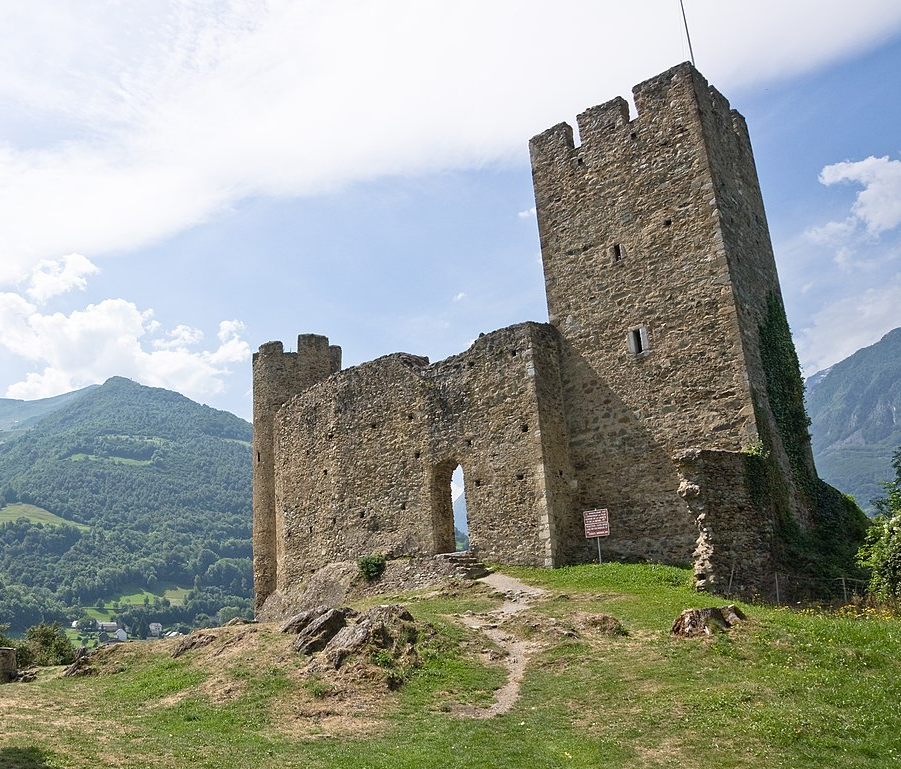 Les guerres s’éloignant, le château Sainte-Marie perd sa vocation de forteresse. Au début du XVIIe siècle, il passe à la famille du comte de Comminges et y reste jusqu'au début du XVIIIe siècle. Il est peu à peu abandonné et devient « masure ». Vendu comme bien national lors de la Révolution, ses tours guerrières servent alors de grenier à foin !
Ses derniers vestiges, inscrits au titre des monuments historiques, seront restaurés à partir de 1980. On peut aujourd’hui admirer les deux tours de défense : la tour ronde et le donjon carré, ainsi qu’une partie du mur d’enceinte (la courtine) et sa haute porte romane.
From this esplanade, the panoramic view over the Gave de Pau and Bastan valleys is unparalleled.
The Medieval Festival, a successful gamble for the village of Esterre
Since 2019, the castle has been owned by the municipality of Esterre. But having such an old castle in such a location is good, but bringing it back to life is even better!
Aussi, quand les Ours de Bigorre, compagnie de béhourd – du vieux français « behort » qui désigne les tournois de chevalerie - suggère d’y lancer des Médiévales, le conseil municipal d’Esterre n’hésite pas.
C’est ainsi que naissent les premières Médiévales, dès 2019. Tout le village relève le défi, faisant ainsi honneur à leurs glorieux ancêtres. En quelques mois, avec l’appui des Ours et de Marc Vayrac dit le Forgeron, spécialiste des Médiévales, l’événement prend vie et corps !
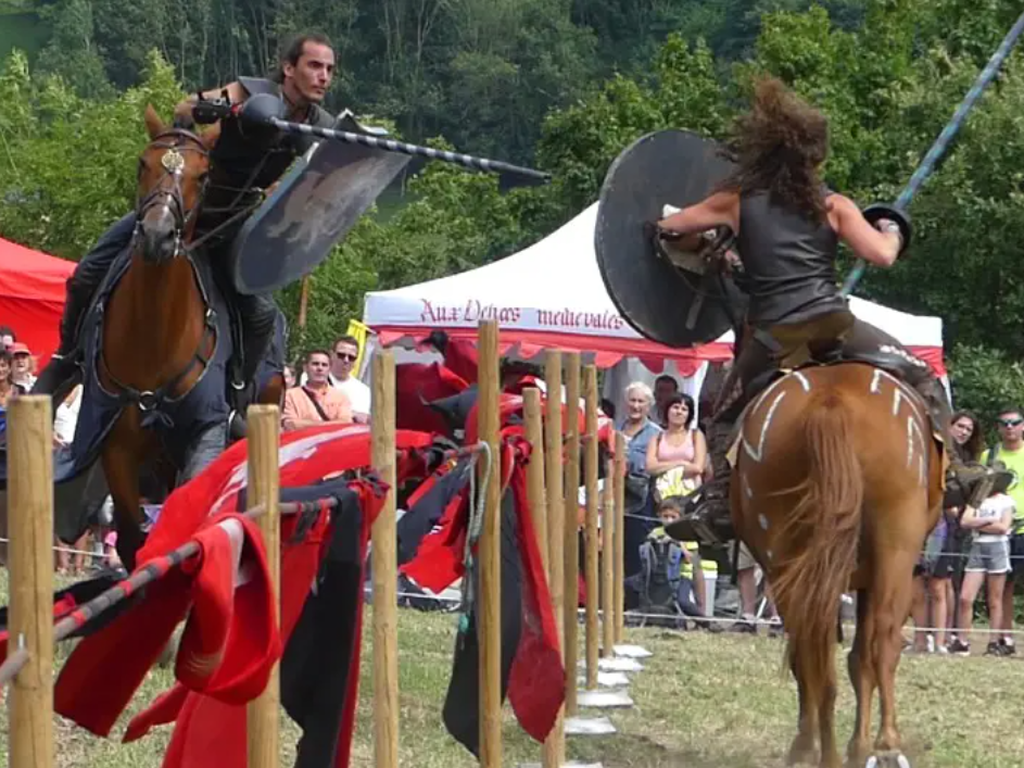 Les Médiévales du Château Sainte Marie sont devenues un festival incontournable de l’été en Pays Toy. Une centaine d’artistes des arts médiévaux vient s’y produire : combattants à l'épée, archers, voltigeurs et lanceurs équestres, cracheurs de feu…
Sur deux jours, les spectacles s’enchaînent avec théâtre, danses et musique. Des Initiations au maniement d’armes médiévales – combat à l’épée, lancer de hache, tir à l'arc – mais aussi des activités moins guerrières, comme la découverte de la vie quotidienne et des jeux médiévaux, sans oublier les incontournables banquets et tavernes !
Incontestablement, un grand moment d’histoire du pays Toy, à ne pas manquer ! N'hésitez pas à en profiter en séjournant au Chalet La Source !

