
Mountain Biking Preparation: 1- Physical Fitness
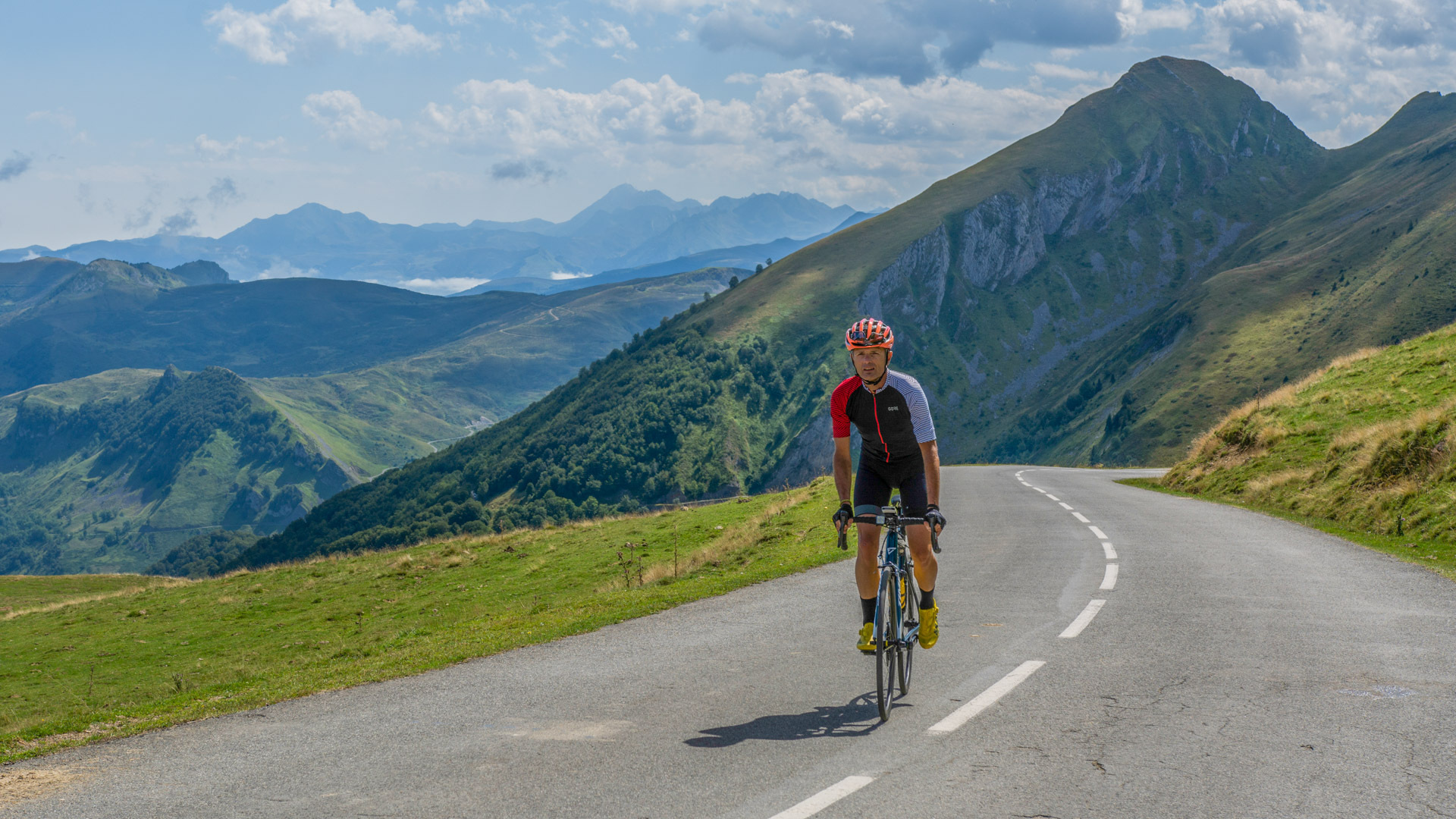 Any cyclist who regularly rides on flat terrain is used to hills and undulating circuits.
But the mountains are something else entirely in terms of intensity and duration of effort.
Here are some tips to help you prepare specifically for the mountains. A successful cycling holiday at Chalet La Source is well worth a few weeks of preparation!
Prioritize quality over quantity
The starting point is a solid : long runs, a diet that limits fat and simple sugar intake. This already provides a good power-to-weight ratio to begin specific training.
Specific mountain training: at least one month before the mountain passes, gradually increase to 2 to 4 sessions per week, leaving at least one day of recovery between two intense sessions, and alternating the focus areas (strength, threshold, speed, changes of pace). Always begin each session with a warm-up and finish with a cool-down.
 Strength training typically involves climbing all the hills on a hilly course using a higher gear, at 45-60 rpm, without significantly increasing the heart rate (i2). The rider remains seated as much as possible to work only the legs, and focuses on pedaling technique.
Threshold training aims to push back the anaerobic threshold as much as possible, the point at which the body produces more lactic acid than it can eliminate (hence the term lactate threshold). Typically, this will be the pace of a time trial, intermediate between endurance and short efforts: a sustained tempo with high but controlled breathing. It is trained through sets in zone i4.
 Speed work (the ability to "spin") helps maintain good oxygenation of the muscles and elimination of lactic acid.
For example, we will repeat several times a small loop composed of several hills, at a high cadence (90 rpm or more) and in effort zone i2. As the objective is to maintain the pace over time, we will work more on "long cadence".
The change of pace ("short bursts of speed") is developed through interval training exercises inspired by athletics. This involves alternating short phases in i1/i2 and accelerations in i4/i5 uphill, either in a seated position or by performing transitions from seated to standing.
These sessions include technical exercises both uphill and downhill.
To illustrate, here are some examples of sessions (see the definitions of effort zones at the end of the article):
|
Type of effort |
Pace |
Example of an exercise |
Example of an exercise |
|
Strength |
Overgear |
2 sets of 5 x 1 min (i2), |
3 sets of 5 min (i2) |
|
Threshold |
80 rpm |
5 sets of 4 minutes (i4), 4 minutes recovery |
3 sets of 10 minutes (i4) |
|
Velocity |
90-100 rpm |
3 sets of 10 minutes at 90-100 rpm (i2), 10 minutes recovery |
2 sets of 30 minutes at 100 rpm or more (i2), 15 minutes recovery |
|
Fractionated |
seated 80-90 rpm, dancer 70-80 rpm |
2 sets of 5 x 15 sec (i5) |
3 sets of 5 x 30 sec (i5) |
General Physical Preparation (GPP)
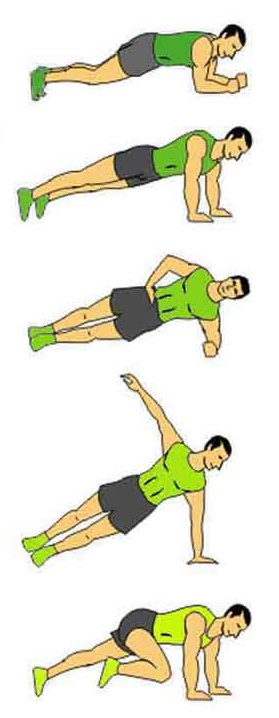 To optimize your cycling training, nothing beats a good general physical preparation (GPP). The best strength training exercises for cyclists are as follows:
Core strengthening exercises to reinforce the back and abs. Good core stability prevents unwanted movements (shoulder wobble, pelvic rotation, etc.) and improves pedaling efficiency.
⇒ Plank (front and side), wall sit, superman/woman exercise, crunches, rowing machine…
Exercises to strengthen the glutes and thighs.
⇒ Squats, lunges, stair climbs, calf raises…
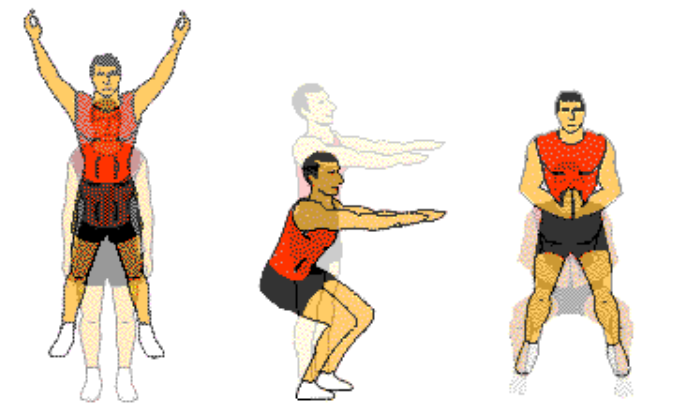 Plyometric exercises to develop explosiveness, making you more comfortable with changes of pace on the bike.
⇒ Squat jumps, box jumps, lunges
These exercises should be performed in a circuit training format, with 30 seconds of exercise followed by 30 seconds of rest.
Monitoring tools to help you make progress
Sensations alone can be misleading. By linking personal sensations with objective data, monitoring helps you better understand yourself, measure your progress, and control your effort during a climb.
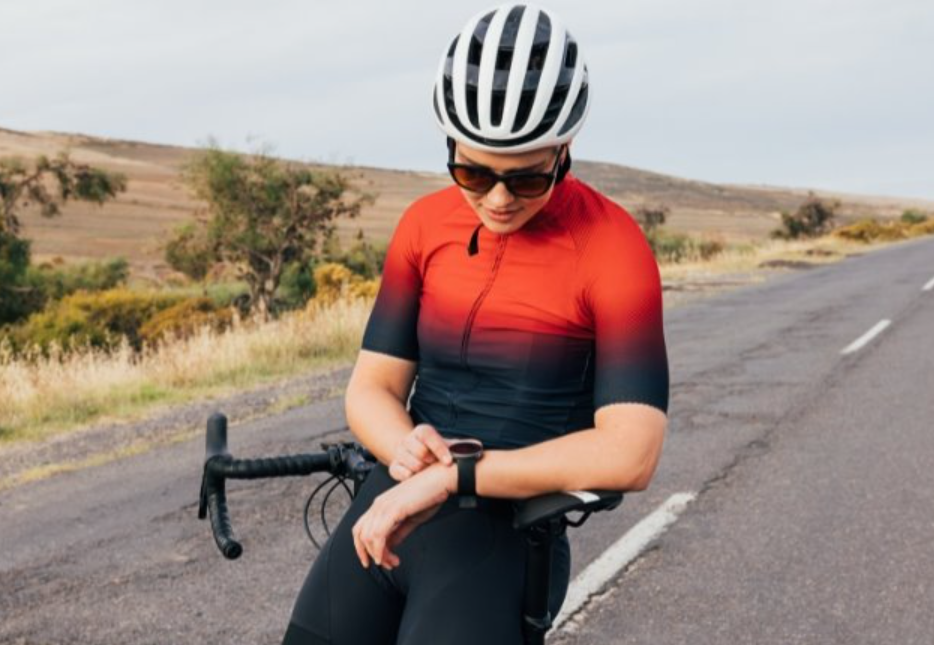 The heart rate monitor is the basic tool, as heart rate is directly linked to muscle oxygenation.
The power meter , which is becoming increasingly popular, adds an extra benefit by allowing athletes to disregard external parameters that affect their heart rate: heat, stress, fatigue, hydration…
Effort zones in cycling
|
Area |
Intensity |
% FCM |
Type of effort – Perceived effort – Maximum duration of effort for an average level |
|
i1 |
Lightweight |
< 75% |
Active recovery: |
|
i2 |
Average |
75-85% |
Endurance: |
|
i3 |
Supported |
85-92% |
Rhythm: |
|
i4 |
Critical |
92-96% |
Threshold: |
|
i5 |
Over- |
96-100% |
Tolerance: |
|
i6, i7 |
Max |
100% |
Sprint: |
Good development: adapting the gears to your level
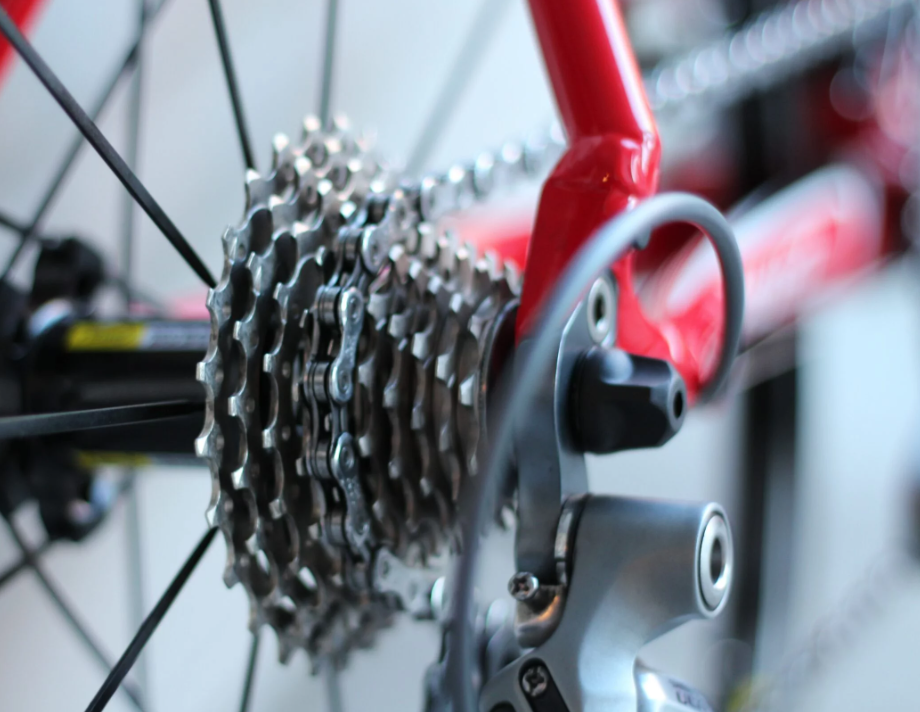 Evaluate the gearing you need for difficult climbs (gradients above 10%) by measuring the cadence – and therefore the speed – you can maintain, your "comfort zone".
To do this, you need to test yourself on a consistent, uphill climb.
In practice, a 1:1 ratio is a good guarantee for tackling all terrains (in the example above: 34x34). In any case, you should allow for some extra clearance to handle rougher sections.
For example, for a 34-tooth chainring / 28-34 sprockets, here are the speeds obtained for cadences of 70 to 90 rpm (on a standard 700x25 wheel):
|
Cadence |
Speed in km/h depending on the gear ratio |
|||
|
34x34 |
34x32 |
34x30 |
34x28 |
|
|
70 rpm |
8.9 |
9.4 |
10.0 |
10.7 |
|
80 rpm |
10.1 |
10.8 |
11.5 |
12.3 |
|
90 rpm |
11.3 |
12.1 |
12.9 |
13.8 |
And now, have a good training session, and see you in the next article for the second part of Mountain Bike Preparation: Technique...
See you very soon at Chalet La Source!

- Views: 5588