Access the main content

Chalet La Source | Cauterets - Hautes-Pyrénées

Add beautiful,
it's in our nature

Slide 1

On June 14th, the GNFY Lourdes Tourmalet Cyclo race
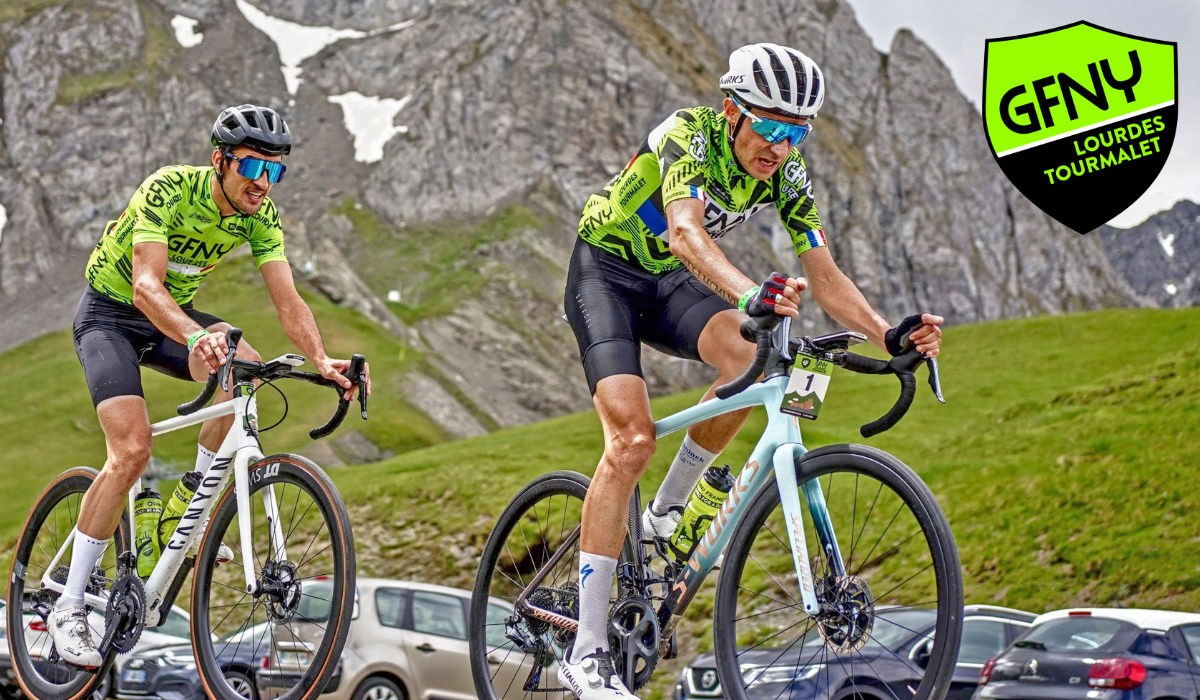
GFNY Lourdes Tourmalet 1Held worldwide, GFNY or "Gran Fondo New York" races are long-distance cycling events, often with significant elevation gain. Whether timed or not, GFNYs are renowned for their quality and incredibly friendly atmosphere.

In 2026, five dates are scheduled in France, including June 14th in Lourdes-Tourmalet, and two magnificent routes on the sacred lands of cycling!


The Long Route: 157km / 4000m+ via the Aspin and Tourmalet passes.

The runners leave Lourdes for 60km where several small passes between 600m and 800m follow one another, on the foothills of the Pyrenees.
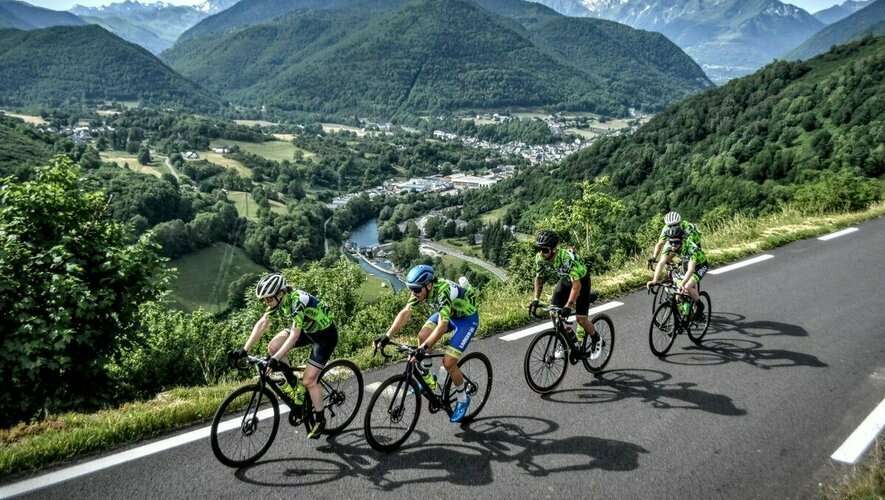
GFNY Lourdes Tourmalet 2At 75 km, things get serious with the climb of the Col d'Aspin, frequently used by the Tour de France: 12km long, 800m of elevation gain, a maximum gradient of 10% and a summit at 1493m.

Immediately after the descent from the Col d'Aspin, it climbs again to the second jewel of cycling: the Col du Tourmalet, at 2115m high.

The climb from Sainte-Marie-de-Campan, on the west side of the Col, is 17.1 km long and gains 1267 m with an average gradient of 7.4% and a maximum of 11%.

From the pass, there's a 34km descent followed by 13km of gentle downhill sections leading back to Lourdes. Beware of headwinds here; it's best to find a group to ride with for this last part of the route.

The long course is a competition: finishers are ranked by time and category, with an awards ceremony and podium presentation. In addition, the top 10% in each age group qualify for the Priority Start area at every GFNY global event.


The Medium Route: 99km / 2000m+ elevation gain, centered on the Col du Tourmalet

The start is given at the same time as the runners of the long course, and the first 30 kilometers are common.

GFNY Lourdes Tourmalet 3From Bagnères-de-Bigorre, the medium route goes up the Adour valley, to reach directly the foot of the sacred monster: the Col du Tourmalet.

As with the long route, the ascent to the pass is on the west side, from Sainte-Marie-de-Campan, and the end of the race is identical until the return to Lourdes.

Here, there is no competition: the runners know their time, but are not ranked.

For more information: https://lourdes.gfny.com/


How about booking a stay at Chalet La Source to come and enjoy this wonderful event?


  • Views: 403

From May 28th to 31st, 2026: the Pyrénées Bike Festival, in Loudenvielle-Peyragudes

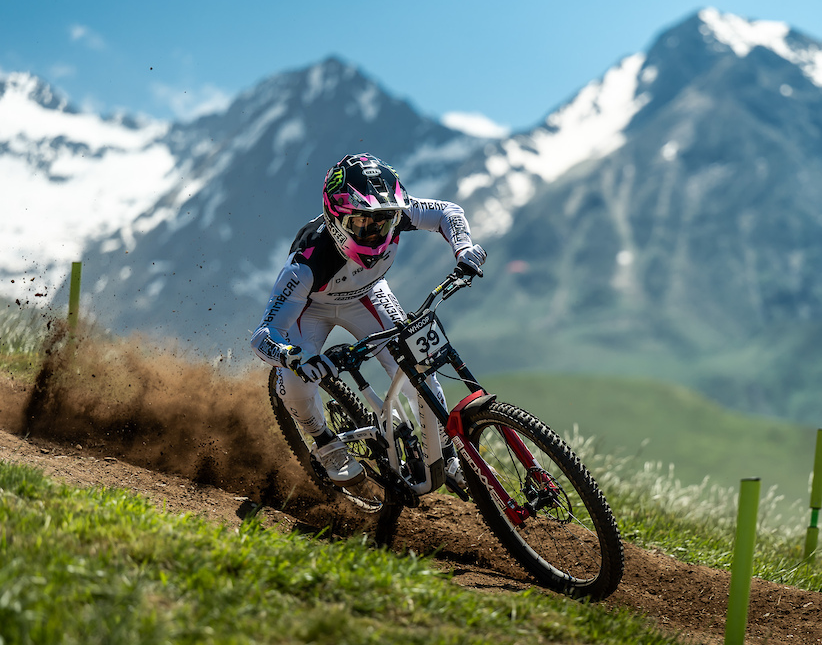
Bike Festival DownhillNext May, mountain biking returns to the Louron Valley for its festival!
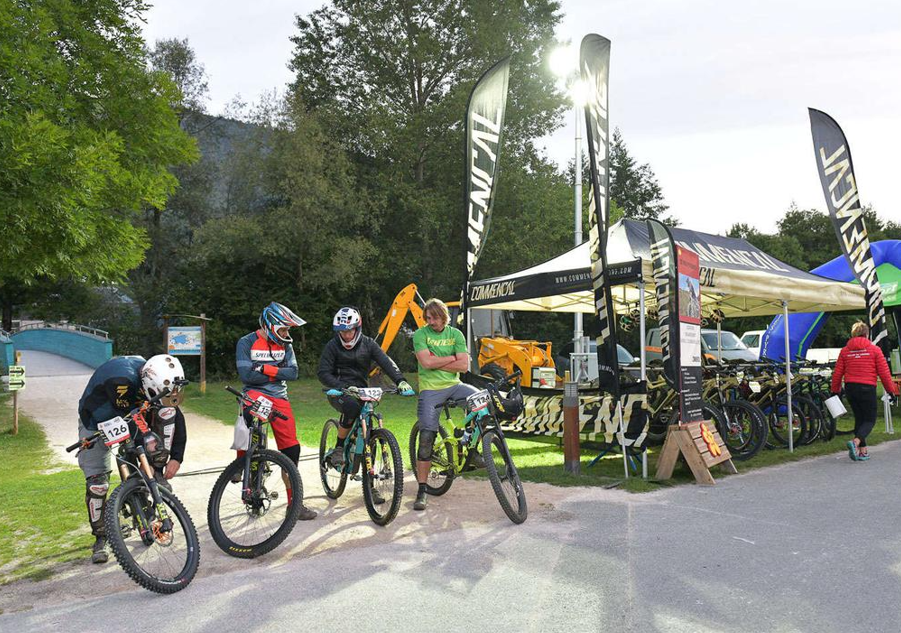
The famous Pyrénées Bike Festival will take place at the renowned Peyragudes spot.

Numerous exhibitors and activities around mountain biking, races for young and old, amateurs and pros, including a stage of the UCI MTB World Series.

A spectacular show is in store!


The Village and the Festival

"bike village" Bike Festival Villagewill be set up for four days in a magnificent location near the village of Loudenvielle, on the riverbank and close to the pumptrack circuit.

Many professionals will be present - bikes, accessories, equipment, services - and a whole range of activities around mountain biking - films, demonstrations, hikes... in the joyful atmosphere of the bandas!

The festival's biggest advantage: the opportunity to test the display bikes for free, either on a specially designed circuit or during one of the scheduled rides. A chance to experience the latest innovations in real-world conditions!

And of course, all this without missing anything from the competition, thanks to a screen that will broadcast live the races in progress, and also in the evening, new films.

Kids' races

Bike Festival Course Kids EnduroOn site, visitors will be able to register their budding champions for several types of races, depending on age and skill level, where everyone can push their limits while having fun:
The Enduro Kids event features 4 special stages for U11/U13/U15 and 5 special stages for U17. Young riders will have the opportunity to ride the Louron Bike & Trail, some of which are used by professionals. There's 250m of elevation gain for the younger riders and 550m for the older ones.

The XC Kids, for children aged 7 to 9, is a loop starting from the Enduro paddock, and a circuit around Lake Génos, then between the trees of the park, and finally on the bumps of the pumptrack for an arrival at the paddock.

Bike Festival Course KidsThe Mini XC Challenge, for children aged 5 to 7 who are already comfortable on a bike; a fun and dynamic event, with obstacles and challenges to overcome, to discover the first sensations of competition in complete safety.
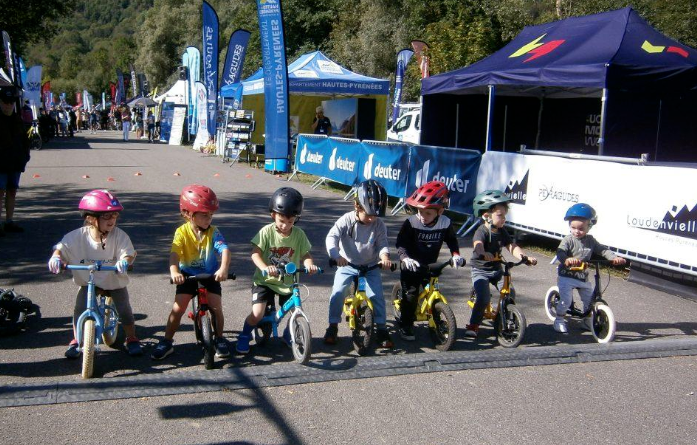
The Balance Bike Challenge, for children aged 3 to 5, is a balance bike ride through the heart of the festival village, cheered on by everyone! A balance bike will be available for children who don't have one, so don't hesitate!


Pro races

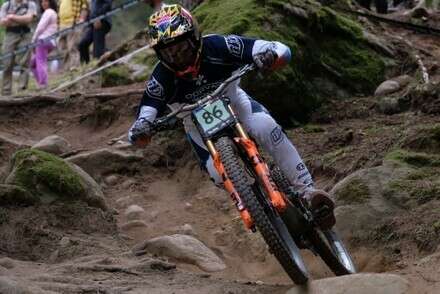
Downhill ProThe UCI Downhill Pro, Pro World Cup event – ​​More than 200 elite professional riders will challenge the clock in a spectacular race, combining speed and impressive jumps, on a specially created, ultra-technical track winding through the forests of Loudenvielle.
Over the four days of the festival, the event will begin with course inspections and practice runs, followed by qualifying rounds and finally the finals.
An exceptional spectacle is in store!

The UCI Enduro Pro - Combining physical effort and technical descents, this other Pro event is the flagship and historic discipline of the Louron Valley.

Bike Festival EnduroAfter a day of reconnaissance, the race takes place over a day during which the drivers alternate between timed Special stages and untimed liaison stages.
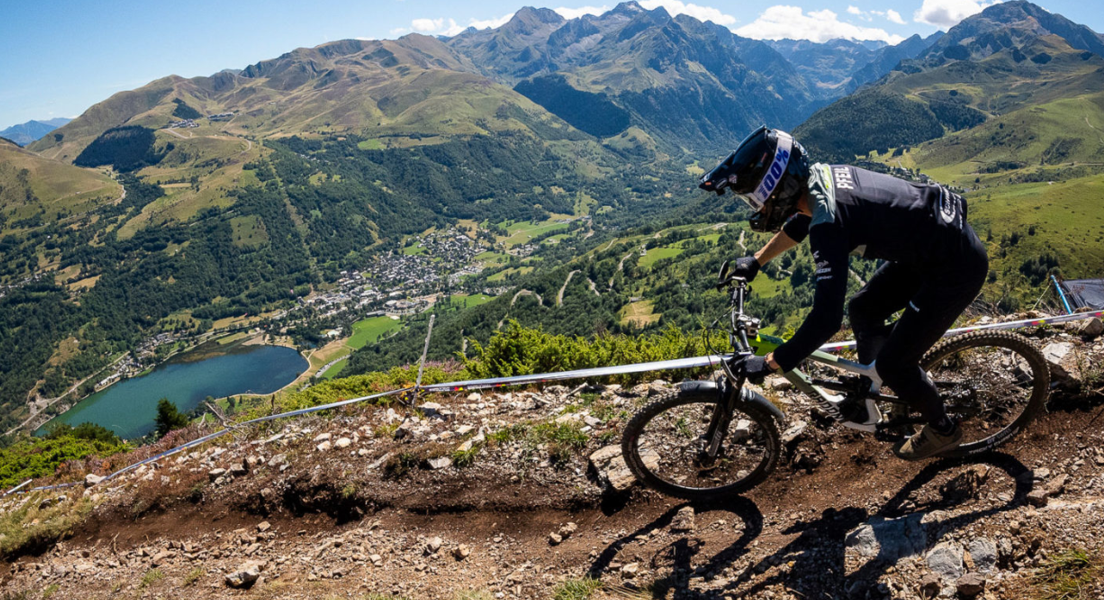
The special stages, mostly downhill, are laid out on narrow natural trails, where the concept of driving takes on its full meaning!

The Loudenvielle Enduro Open - Alongside the Pro race, this race – which includes an E-MTB category – is intended for amateurs with an almost identical program but a wider time limit.

For more information: https://www.pyreneesbikefestival.com/


If you're passionate about mountain biking, this is an event not to be missed! Don't hesitate to come and enjoy it by booking your stay at Chalet La Source !

  • Views: 346

July 9, 2026: an exceptional stage of the Tour in the Hautes-Pyrénées!

The 6th stage of the 2026 Tour will offer a route combining "the classic and the unprecedented", with two mythical passes - Col d'Aspin and Col du Tourmalet - and a finish at the foot of the famous Brèche de Roland, in the sumptuous setting of the Cirque de Gavarnie. 

For the 113th edition of the Grande Boucle, two stages will take place in the Hautes-Pyrénées: on July 8, the sprinters will be in the spotlight between Lannemezan and Pau, then the next day, it's time for the high mountains between Pau and Gavarnie-Gèdre.

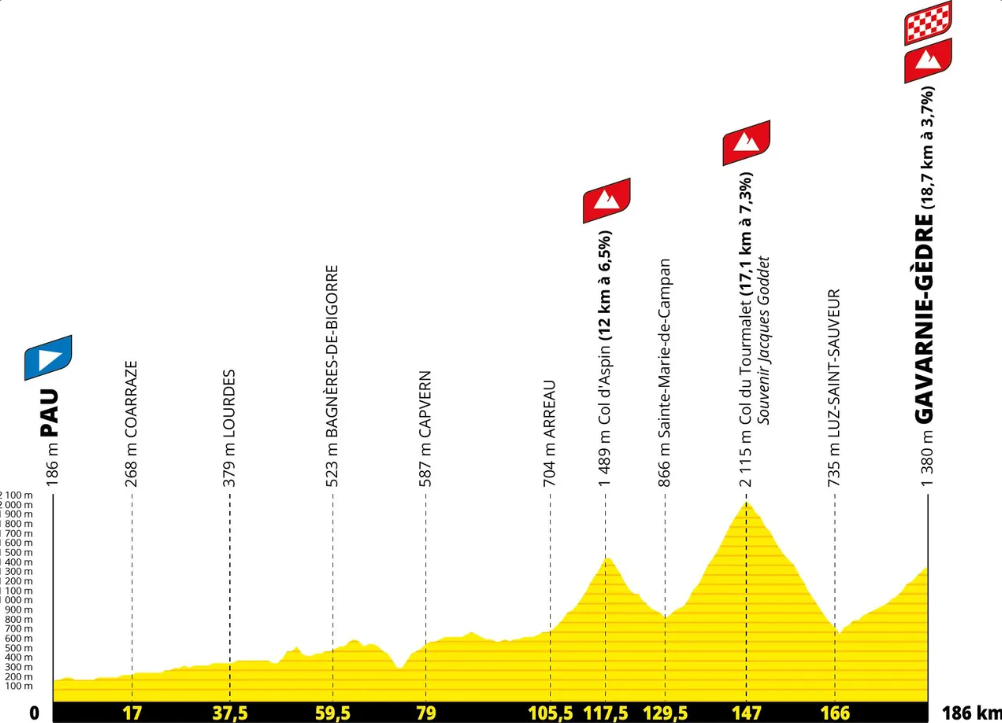
Tour 2026 Stage Pau-GavarnieThe profile of this 186 km stage:

After departing from Pau, the peloton will climb the Col d'Aspin (1,489 m), then the legendary Col du Tourmalet (2,115 m). These classic climbs will be the preferred terrain for climbers and attackers.

The second part of the route climbs towards Gavarnie-Gèdre , a new section leading to the heart of the Cirque de Gavarnie on a road nearly 19km long with an average gradient of 4% . This rolling but demanding climb could well shake things up!

This stage will therefore be very interesting due to its tactical uncertainty and the variety of profiles it offers, where it will be necessary to combine strength, endurance and race intelligence.

The teams of the favorites will have to decide whether to take risks or play it safe. Everything will depend on the ambitions of the leaders: securing a good overall result, or attempting a decisive move to turn the race on its head in the Pyrenees.
The battle between the favorites could well begin on the major mountain passes. But if they decide to wait until the final forty kilometers, the decisive move will come down to the best climbers in a breakaway, on a long but rolling climb, set against the magnificent backdrop of the spectacular Cirque de Gavarnie.

A magnificent spectacle in prospect!

With its alpine profile, unprecedented finish, and magnificent setting, this 6th stage of the 2026 Tour de France between Pau and Gavarnie-Gèdre promises to be a highlight of the cycling spectacle. It could mark a turning point in the race for the yellow jersey, or offer an unforgettable moment for a daring climber.

Come and experience this exceptional stage of the 2026 Tour de France by booking your stay at Chalet La Source !

  • Views: 249

From July 13th to 17th: mountain passes reserved for cyclists, for the Pyrénées Cycl'n Trip!

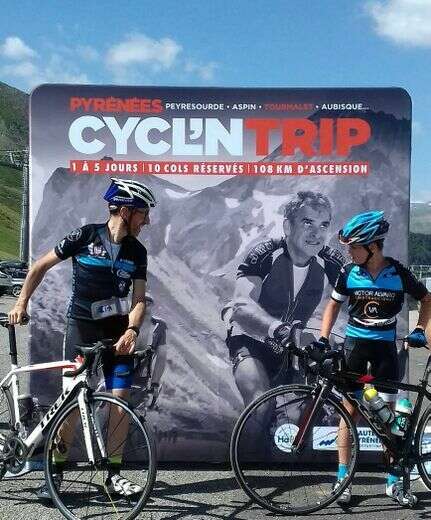
CyclnTrip CoverEvery year, during the week following the passage of the Tour de France through the Hautes Pyrénées, the famous Cycl'n Trip , where the mountain passes are reserved for cyclists.
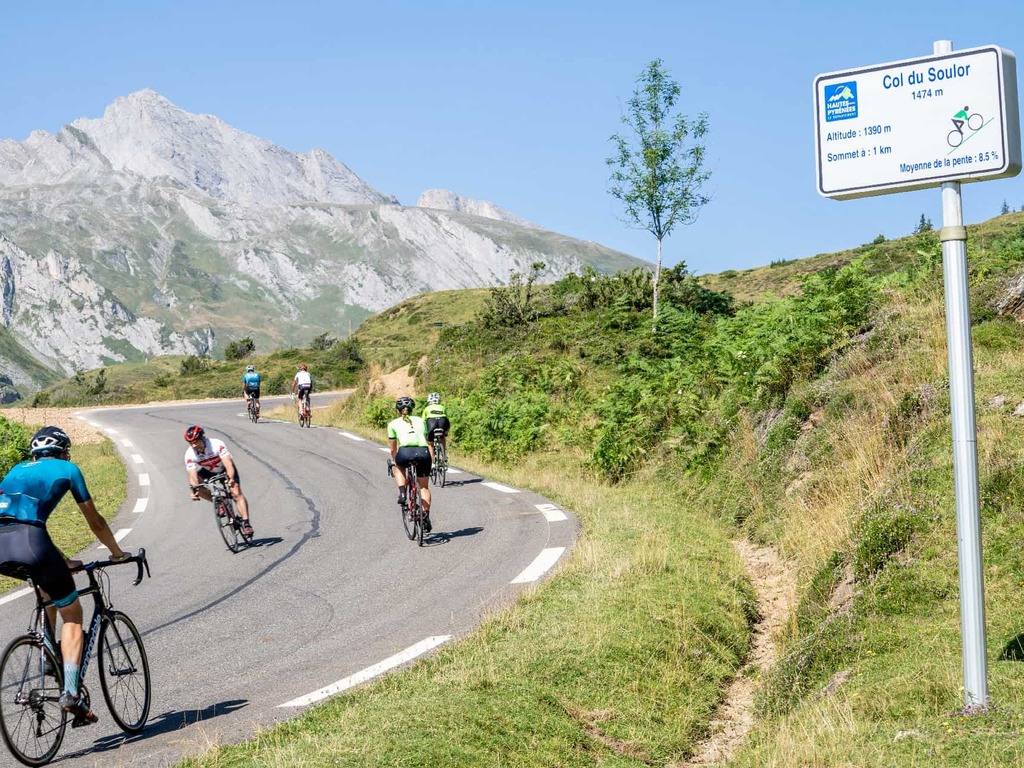
For five days, a dozen mountain passes are closed to car traffic, at a rate of 1 to 3 per day, in order to allow cycling enthusiasts to climb these mythical slopes, each at their own pace.

Come and join us for this wonderful cycling festival, with family or friends!


Why should only professionals have exclusive access to roads in one of Europe's most beautiful cycling areas?
Why not offer the opportunity to ride in the wake of champions, when cyclists from all over the world are dying to discover our mountain passes?

CylnTrip SoulorIt is on this observation that the Departmental Council of Hautes-Pyrénées, in collaboration with the municipalities concerned, conceived this unique system "Pyrénées Cycl'n Trip" which has now been operating for several years.
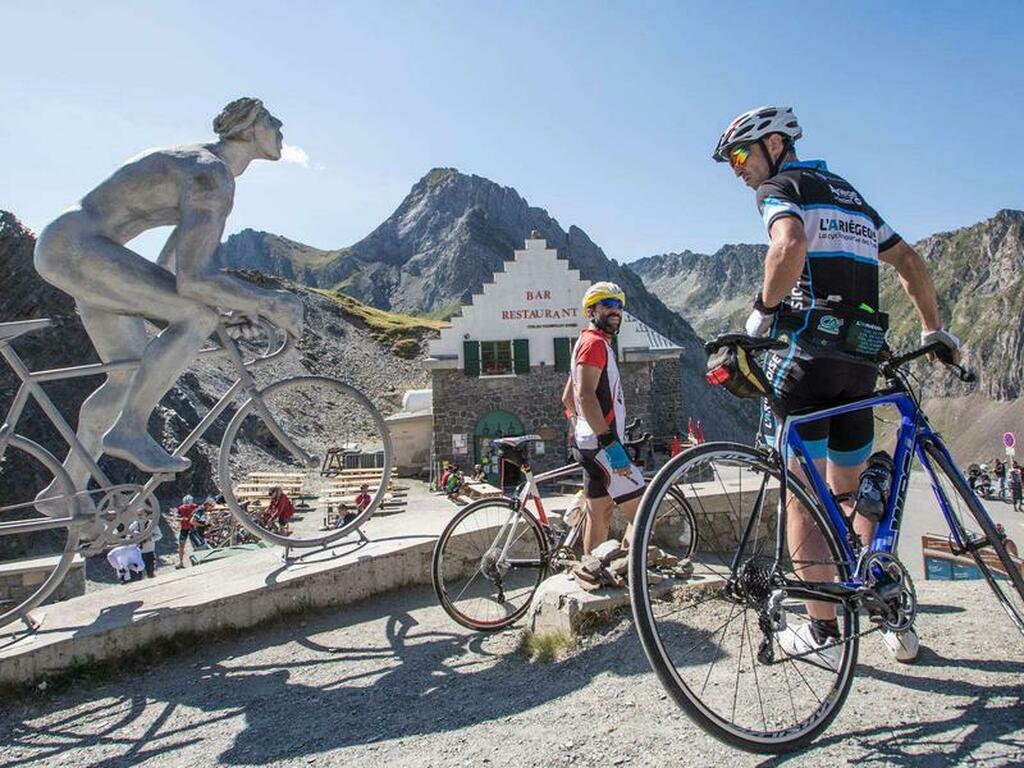
Thus, every year, on the Monday following the passage of the Tour de France, the mountain passes are closed from east to west, to allow cycling ascents on "privatized" roads, and this is done on each side. 

In total, 11 reserved passes which represent a potential of 153 km of climbing.


CylnTrip TourmaletParticipation is open to all: free, no registration, no fixed start time and no timing, everyone rides at their own pace … it can hardly be more open!
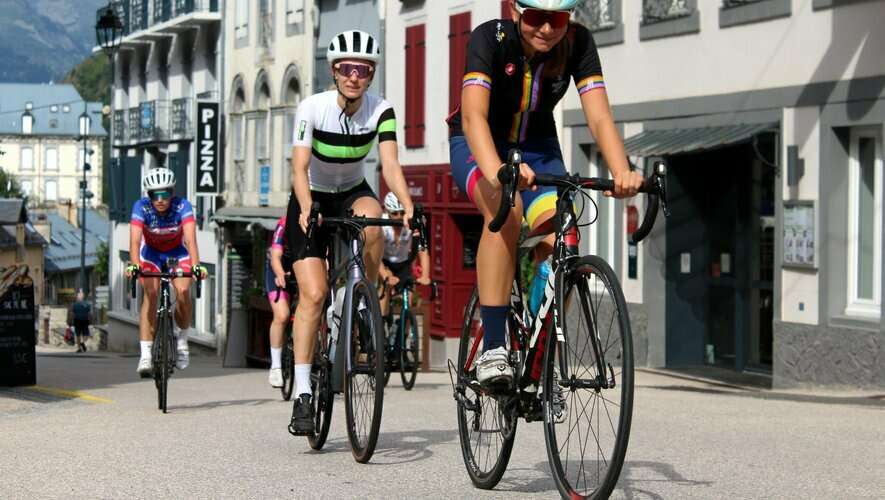
And since there are no cars, you can stop whenever you want to catch your breath, wait for friends, or simply admire the scenery... At the top of each climb, refreshments await you, as well as a small souvenir and a stamped passport before heading back down!

Passionate and experienced cyclists, families or groups of friends of all levels, on classic or electric bikes, all come together to share the climb of their choice, for one or more days.

CylnTrip DepartureThis operation mobilizes numerous departmental and local stakeholders with the support of the gendarmerie.
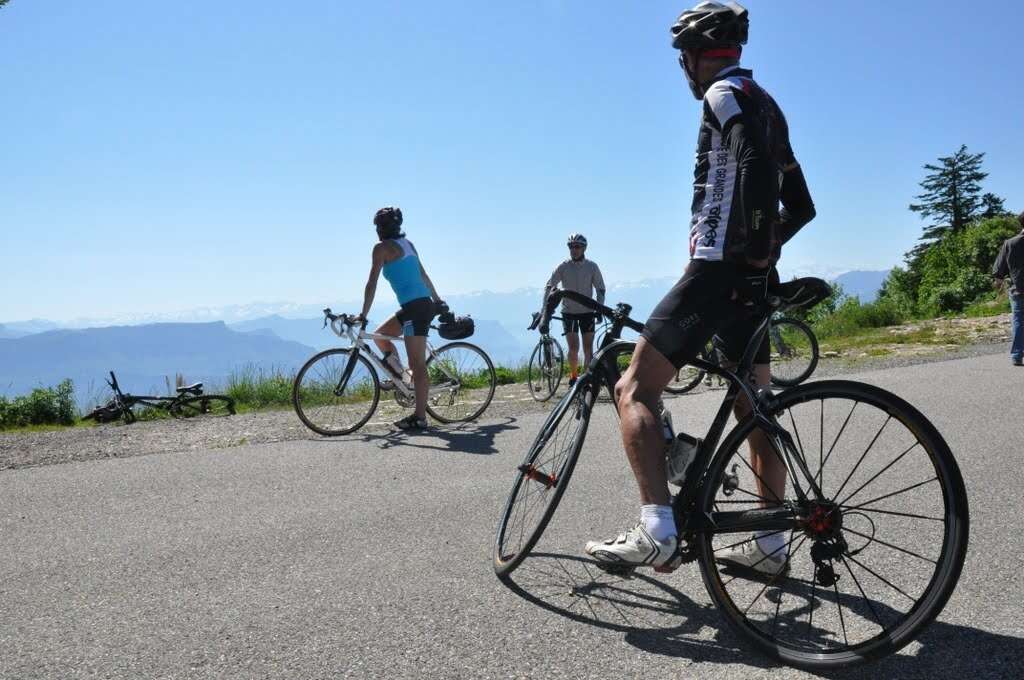
The success is commensurate with the effort, with nearly 5,000 participants across all the mountain passes. On the legendary Tourmalet alone, almost 1,000 cyclists were counted in the morning!

At the start of each mountain pass reserved for cyclists, a vehicle checkpoint and cyclist reception area is set up. Depending on the pass, the closed section of road varies in length. Only certain vehicles are permitted: emergency services, organizers, and local residents. Thus, right from the start, not a single car is allowed!

CyclnTrip CoolA great atmosphere of competition, whether for the personal challenge of "conquering a mountain pass" or even for the time trial – some excellent amateur teams make the trip – or simply the pleasure of a climb in the peaceful valley.

Because, beyond the safety aspect, what a joy it is to climb without an engine roaring in front of you, or the fear of a car whizzing past as it overtakes you!

For one morning, engines disappear in favor of the "click" of gear changes... From one end of the pass to the other, only bicycles!

It's so nice that some people even choose to take their holidays at that time, just to participate in this event.


Come and enjoy these great moments by staying at Chalet La Source during the Cycl'n Trip!

 gray separator

  • Views: 176

Mountain Bike Preparation: 2 – Technique

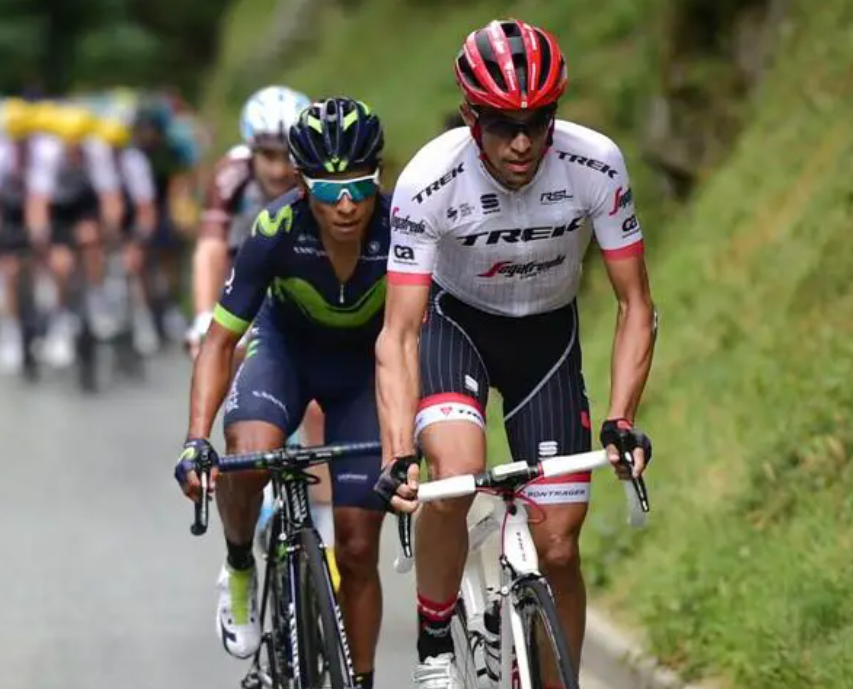
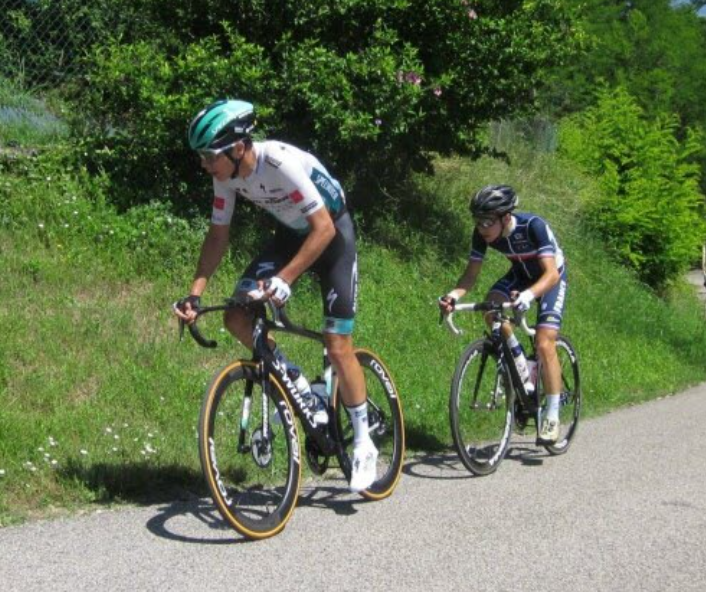
Chalet La Source Technique Contador QuintanaAny cyclist who regularly rides on flat terrain is used to hills and undulating circuits.
But the mountains are a different story in terms of duration and intensity of effort. flaws have more pronounced negative consequences than on flat terrain, both during the ascent and the descent.

Here is a brief overview of the points to work on.

And even if you don't climb like Alberto Contador or Nairo Quintana, a successful cycling holiday at Chalet La Source is well worth a few weeks of preparation! 


 The climbing technique

Learn to breathe effectively

  • Deep, regular breathing contributes to proper oxygenation and CO2 removal, thus increasing performance. A common mistake in cycling is breathing only with the upper part of the rib cage, leading to erratic breathing during difficult sections (hyperventilation).
  • Breathe from your diaphragm, inhale through your nose: to maximize chest expansion, you must get used to inhaling through your nose, first expanding your abdomen without straining your rib cage, which expands naturally thanks to the diaphragm. Nasal inhalation also has the advantage of preventing your mouth from drying out quickly.
  • Coordinate your breathing: on a steady climb, coordinating your breathing with your pedaling cadence helps to increase consistency and reduce fatigue.
  • Practicing this outside of cycling: thanks to heart coherence apps like Kardia, you can train yourself to reduce your breathing from 15-20 breaths per minute (normal) to 10 per minute using abdominal breathing. Yoga, Pilates, and swimming are very useful complements for learning to breathe properly.

Optimizing your pedal stroke: the famous "Smooth pedaling"

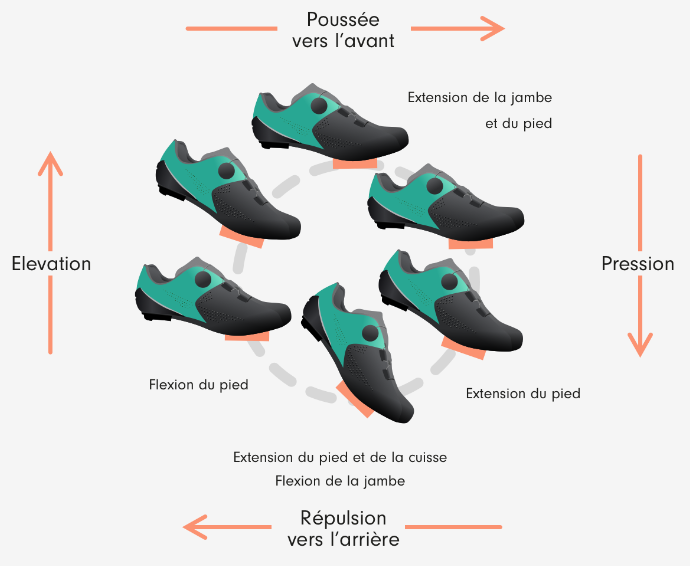
  • Chalet La Source Technical Bike Pedaling in a RoundThis technical skill is not specific to the mountains, and it will take much more than a month to master it, but it significantly improves power during ascents, so all the more reason to start using it!
  • It's a circular movement with the feet, not just vertical, to limit "dead spots" when the pedal is at the top or bottom. At that moment, each foot "wraps" its pedal in a coordinated movement: while one pushes the upper pedal, the other pulls the lower pedal as if to claw at the ground.
  • Circular pedaling engages the calf muscles and extensors much more than vertical pedaling, where the thighs are mainly working.
  • It requires coordination—especially at high cadence—and the best way to learn it is to focus on one leg at a time while keeping your focus on the rest of your body. On a stationary bike, work one leg, then the other, for a few minutes each. Do this several times a week.

Chalet La Source Technical Seated Bicycle DancerWhile seated, work on your core strength and speed
  • Watch the pros: up top, nothing moves, and yet they're spinning fast! In a seated position, efficiency is indeed optimal when you manage to ride comfortably at a high cadence (80 rpm minimum), this cadence offering the best biomechanical performance and muscle oxygenation. At high cadence, good core stability is essential; it allows for better distribution of force on the bike.
  • Target cadences are 75-80 uphill and up to 105-110 on flat or slightly downhill terrain.
  • This level of cadence implies a good cardiac output and specific training (hill speed), but also core work, and well-adapted gears (see last paragraph).

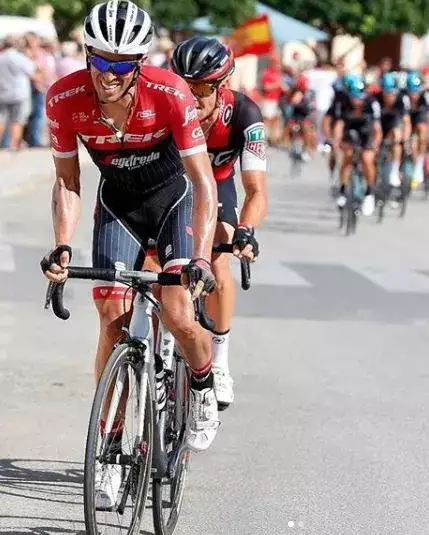
Chalet La Source Technical Velo ContadorAs a dancer, work on fluidity

  • In the mountains, we stand up on the pedals to accelerate on steeper sections or to relax after a long period of sitting. Indeed, when seated, the quadriceps (located on the top of the thigh) and gluteus maximus muscles are heavily used. The standing position allows them to recover by engaging other muscles (iliac psoas, rectus femoris, and sartorius)
  • Shift down one tooth just before you stand up on the pedals, and shift up one tooth once you are seated on the saddle. 
  • To ensure efficient power transfer to the pedals, keep your torso upright, shoulders directly above the handlebars (no further forward), and shift your weight alternately towards the side of your descending leg, without moving the bike. Whether you use straight or bent arms is a matter of feel to find the most efficient and fluid technique.
  • The pedaling motion remains smooth and fluid, with the ankles acting as pivot points, to avoid a sharp rise in heart rate.
  • For effective learning, start at a low cadence (50-60 rpm) with high gears on climbs. While everyone has their own style, don't hesitate to watch how the pros do it – like in this photo of a master of the sport, Alberto Contador.

The descent technique

Mastering the technique of descending on flat terrain and small hills

  • One of the biggest fears cyclists have on descents is the feeling that the bike will slip away from them. It's important to learn to descend smoothly and without stress, which also contributes to better recovery.
  • Start by practicing on small bumps or even on flat ground for the downhill position.
  • Mountain biking is an excellent way to overcome apprehension about downhill cycling.

The position is low, sitting on the back, the thighs are dynamic

  • The body's center of gravity is lowered, for better stability in turns.
  • The hands are in the drops of the handlebars, index and middle fingers on the brake levers, arms slightly bent and elbows low.
  • To keep the rear wheel on the ground, the position is seated, pushing with the arms to carry the weight on the rear of the bike, even if it means taking your buttocks out of the saddle when you need to brake hard enough.
  • The thighs are dynamic, in a "squat" position to absorb road imperfections and be able to react quickly.
  • In a straight line, the cranks are parallel to the ground, one foot in front and one foot behind.
  • We remain relaxed, taking advantage of the flat areas to relax our back, arms, and hands.

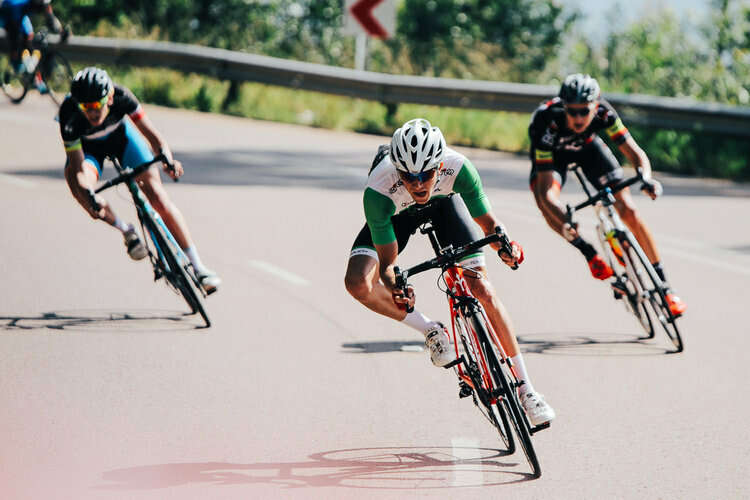
Chalet La Source Technical Bike Downhill PositionThe gaze guides the trajectory, projecting itself far away

  • We naturally tend to ride where we look. Stay focused by looking far ahead, in the direction you want to go, and not at what you want to avoid or at your speedometer.
  • Your gaze should always be directed towards the exit of the bend, then further down the slope to check for any obstacles or traffic.
  • Avoid slopes (gravel) and be especially careful in case of white lines, gravel areas, stones, potholes, vehicles, other slower cyclists or pedestrians, animals, etc.

The body enters the curve and the opposite foot presses down on the pedal in the low position

  • As on a motorcycle, the torso moves in the direction of the turn and the inside knee moves out to facilitate the turn.
  • The outside foot presses down to improve grip, pedal at the bottom at 6 o'clock.

Braking is done with both brakes at the entrance to the turn, and then released afterwards

  • Avoid constant braking to prevent overheating of the brake surfaces on the rims. If you must brake frequently, do so in 1-2 second intervals rather than one smooth, continuous braking.
  • Brake as you approach the turn, before entering the curve, when both wheels are aligned. Raise your torso and simultaneously apply both brakes, modulating them correctly.
  • If you're going too fast, press harder on the rear brake to prevent the front wheel from sliding out. That's why you need weight on the rear.
  • Once you've started the turn, release the brakes, lean the bike over by applying pressure to the outside pedal to improve traction. Never brake while turning.

If possible, maintain pedaling speed and cadence to avoid heavy legs.

  • Your legs have accumulated waste products on the climb, and soreness will appear quickly if they don't move at all.
  • It's therefore necessary to maintain a minimum level of pedaling and cadence to prevent the feeling of heavy legs when accelerating again. To achieve this, avoid using too high a gear on descents. Hairpin bends are ideal for this, as the speed is relatively low.
  • But if this creates too much imbalance, stop pedaling or pedal slowly, it will always be better than nothing!

Safety first!

  • Always remain focused on potential hazards, those of the road itself (gravel, potholes, white lines, water...) or coming from vehicles or other cyclists.
  • Respect the rules of the road.


And now, have a good training session, and don't hesitate to review the previous article for the first part of Mountain Bike Preparation: Physical Conditioning...

See you very soon at Chalet La Source!

gray separator

  • Views: 2275